Showing posts with label Sydney Young. Show all posts

Friday, December 6, 2013

Young - Reflective Blog


At the beginning of the year, I would have never guessed what the Tim Burton Seminar entailed (other than what I could guess from reading the syllabus of course). I guess I thought it would be something along the lines of just watching the movie and lightly analyzing Burton's style. Instead, reading Gothic Fantasy, the articles from Blackboard, and participating in class discussions has allowed me to gain so much more.

The underlying theme that runs in all of Burton's movies, which are usually isolation and abandonment, all relate back to Burton's childhood as well as his young adult years working at Disney. I would not have known to look for autobiographical information within his movies if I did not at first know some background on his life. Like the father in Big Fish, Burton tells his stories with fantasy, exaggerations, and eccentric characters all to express himself through his art. The biographical information and class discussions not only helped to analyze the plot within his movies, but they also aided in the mise en scene analyses.

Every time I look at a movie, I can't help but notice now what the director is trying to do. I have noticed that other directors use mise en scene, or some form of scene composition, to create each frame as though it were a work of art. They interweave symbolism as well as visual clues as to how the scene should be interpreted. I believe Tim Burton does a fabulous job of making each scene look artistic and aesthetically pleasing while simultaneously making the scenes mildly conspicuous compared to all the others.

Finally, by analyzing Tim Burton's films, I have gained valuable writing skills that are not completely formulaic. It is refreshing for me to think about a different kind of writing style because analyzing movies does not follow the typical essay format, which was a relief. The movie review forced me to think outside of the box a bit relative to how the typical essay usually sounds. The research behind the paper was not very tedious because for me it was considerably enjoyable.

As for the rest:

College has been stressful. I have yet to see the reward in it, but I know it's just a long waiting process filled with work. This view may seem overtly negative, but that's just how this semester has gone. I've honestly felt more alone this semester than I have in a while but that's also because I'm away from home and friends etc. The fact that everyone else here pretty much feels the same way too, whether or not they verbalize it, does make me fell a little better.

I'm really enjoying my time here at Loyola and especially New Orleans. It's a city where you can't see everything there is to see even if you live here your whole life, and I've just arrived. The concept is exciting and intimidating but we all fell like little fish in a big pond. By the end of the next four years, I'm sure we'll feel as claustrophobic as ever, and we'll be ready to leave. But for now, no one should stress too much. We're just getting into the swing of things.

Thursday, November 21, 2013

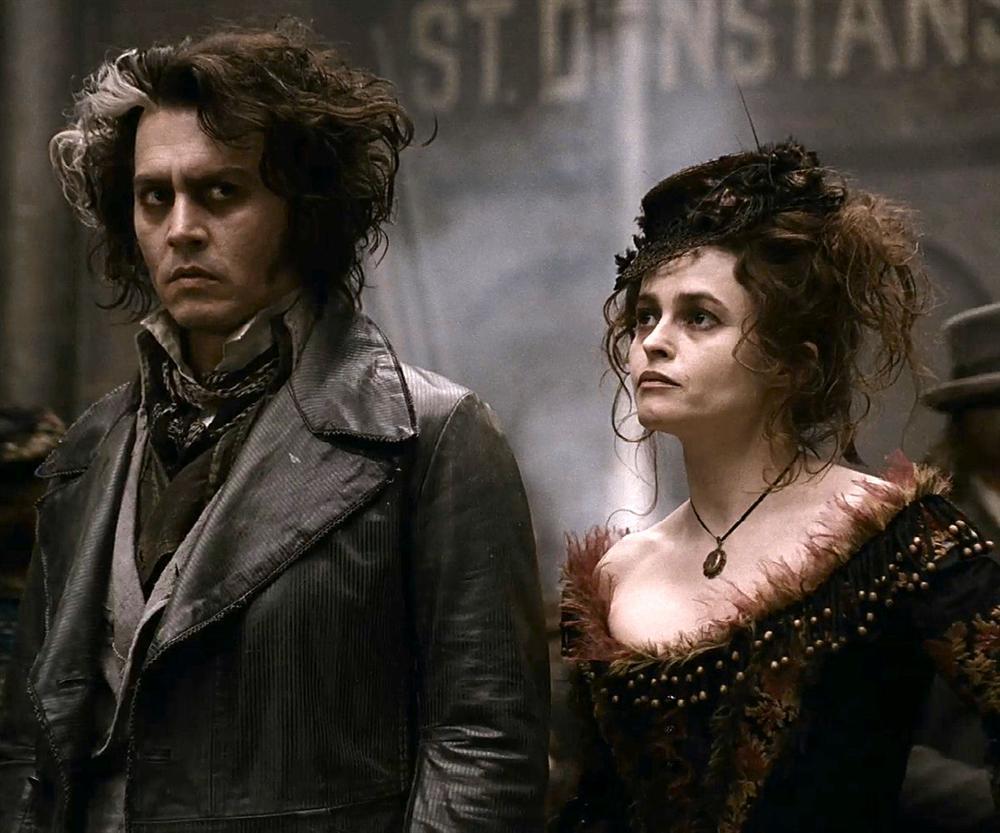
Young - Sweeney Todd

Though Burton is known for incorporating elements of the grotesque, his adaptation of the play Sweeney Todd demonstrates how graphic his movies can be. Throughout Burton's movie, the characters of Sweeney Todd and Miss Lovett should seem completely evil. However, Burton creates a world in which the viewer sympathizes with the amoral Londoners due to their quality of life and the quality of society in general. Although Miss Lovett and Sweeney Todd turn their blood thirst from the judge to preying on the people of London, Burton makes the viewer ultimately sympathize with them due to the affects of cities on Victorian London.

When Sweeney Todd first returns to London, he seeks revenge against the judge for kidnapping his wife. His motive here is basically revenge against one person, and he has a one track intention. However, as he and Miss Lovett peer out the window and speculate who their next victim should be, they realize that all Londoners are the same. Thus, because they do not consider anyone to be an individual, everyone becomes a target.

Sweeney Todd then goes upstairs and sings "No Place Like London," which contains the phrase, "There's a hole in the world like a great black pit/ And it's filled with people who are filled with shit." Here, Sweeney Todd looses his faith in humanity as a whole and sees London as a filthy town caused by urbanization. Consequently, he does not feel sorry for anyone he is about to murder.

Miss Lovett seems to be pure evil, yet the viewer does not completely loathe her because of her situation. She is a widow with a run down pie shop and is suffering due to the urbanization of London. The viewer is able to sympathize with her because many businesses of the time were suffering as a consequence of the factories and again, the urbanization.

In conclusion, normally the viewer would see cannibalism as horrific and cruel. However, Burton's version of Sweeney Todd presents it in a way that makes the viewer sympathize with its inhabitants, specifically Sweeney Todd and Miss Lovett. This sympathy stems from the fact that the factories put many small business out of commission and caused extreme poverty amongst the general population. Thus, the viewer sympathizes with the specific lives of Lovett and Todd.

Friday, November 15, 2013

Young - Big Fish


Tim Burton directs another whimsical, fantastic movie with Big Fish. This movie tells the story of Edward Bloom, a man living in a small town with big dreams. Bloom has a magnetic personality and seems to attract unconventional friends. One of these friends is a giant and the other friends are a pair of Siamese twins. The other character that is draw to Bloom is the ring master of the circus. Bloom shows the abnormal characters kindness because he sees the best in them. These characters are drawn to Edward Bloom due to his personable nature and his contagious optimism.

The giant is drawn to Bloom because he realizes that the two have a few things in common. In the scene when Edward travels to the cave in order to find the giant, he says that he and the giant were meant for bigger things. He realizes that the giant just needs someone to accompany him and be his friend. As they travel together, the giant realizes that Edward is adventurous and brave when he heads into the dark forest. Because of his adventurous spirit and outreach, the giant likes Bloom.

The Siamese twins also see his optimism when he explains to them that he has to get home to his true love. In the scene when the twins and Bloom are in the dressing room, he promises them a better life in America. They trust him because he seems confident as well as adventurous. When he gets home safely, he fulfills the promise, which is why the twins attend his funeral.

The final character that Bloom attracts is the werewolf ringmaster. At first, the ringmaster takes advantage of Edward's willingness to work for free. Eventually, Edward becomes impatient and tries to confront the ringmaster. When he shows him compassion after discovering that he is a werewolf, the ringmaster is appreciative. Here, Edward shows compassion to those creatures who other people would otherwise find them repulsive or abnormal.

The characters within Big Fish all have an affinity towards Edward Bloom. The giant likes Bloom because he is optimistic about the possibilities that could happen if he left the small town. He is also brave as he travels down an unknown path. When Bloom talks to the Siamese twins, he explains his true love, and they admire his passion for the woman he loves. Finally, Bloom cares for a lonely creature that is the werewolf ringmaster. All these characters love Bloom because of his opportunistic view of the world and of their potential.

Friday, November 8, 2013

Young - Planet of the Apes: Technology vs. Primacy

Tim Burton's remake of the 1968 movie version of Planet of the Apes. Within the movie, the apes oppress the humans and refuse to advance technologically. This refusal causes conflicts between scientists and those fighting for the humans' rights. These scenes include those such as when Ari's friend smashes the gun, the curiosity of the spaceship, and the final scenes in which the escaped humans find the space ship. Thus, the movie contains specific scenes in which the duality between remaining primitive and advancing in science are presented.

The first scene that demonstrates the apes' refusal against technology is the one when Captain Davidson threatens Limbo with a gun and Ari's friend destroys it. He claims that Captain Davidson will use it against the apes. Here, he is threatened by technology and what an oppressed species could do with it. It also relates back to the idea that he wants to keep the humans inferior by not allowing them to have superior technology that would enable them to dominate the apes.

The next scene is when the group arrives at the site where Captain Davidson crash landed. Ari is surprised not only at the fact that the humans would dare to go anywhere near the water, but also at the device that Davidson retrieved from the lake. Ari showed intrigue with the device and was curious about everything technological that Davidson possesed. However, she never attempted to use any of the technology.

The final scene is the one in which the humans find the space ship. Ari's friend is reluctant to step inside, and Ari herself is hesitant but finally investigates the ship. She is curious about the ship, but again never attempts to use any of the controls or touch anything. Thus, the majority of the apes are threatened by the use of technology.

Throughout the movie, the apes do not agree with most of the technology used by the humans to the point where they even attempt to destroy it. The destruction of technology is mostly because they fear the rebellions that could rise against them if any other species advances technologically. The apes are curious about the technology, but never actually attempt to use any of the technology. Finally Ari's refusal to touch anything inside the spaceship further demonstrates the apes' refusal to attempt any betterment of their own technology. Consequently, the apes' denial of the advancement of technology demonstrates that they only see it as a threat against their own species and therefore deny any usage of it.


Friday, November 1, 2013

Young - Supernatural Adaptation


Tim Burton's and Washington Irving's versions of Sleepy Hollow share many similarities, yet Burton's version of the story is quite a loose adaptation. One cannot go so far as to say Burton was not just using the titles of each characters. However, his adaptation did stray from Irving's story. Although he does not stick strictly to Irving's original story, Burton uses some of the basic themes within the original short story such as the supernatural, the grotesque, and a gothic feel in order to truly make the story his own.

The first element that Burton uses is the supernatural. The entire story is laden with such themes. It starts when the villagers are explaining to Ichabod Crane that there is a headless horseman and continues as we see the headless horseman as a ghost. The scene in which Crane's mother uses magic also procures the supernatural. Again, the supernatural appears when Katrina Van Tassle's stepmother procures the headless horseman using magic. Thus, the elements of the supernatural are interwoven throughout Burton's story.

As in many of his other movies such as Beetlejuice and Batman Returns, Burton also uses elements of the grotesque in order to make his story in a true Tim Burton style. For example, when the headless horseman chops off the heads of the villagers, there are a lot of bloody special effects. Again when Crane discovers the heads inside the tree, the entire scene is filled with elements of the grotesque. The film also incorporates self mutilation in order to perform magic spells such as when Katrina's step mother cuts her hand in order to perform a spell on one of the villagers.

Finally, the setting of the movie seems quite gothic. Again the setting is in Tim Burton's typical style. He uses dim lighting as he did on the set of Batman and Batman Returns. Burton creates this setting using dim lighting and gives the movie a gray and blue or purple hue throughout the film. The characters' wardrobes are also either neutral colors or black. These wardrobes give the film an ominous undertone.

In conclusion, although Burton's story is not a direct adaptation to Washington Irving's short story, the names of the characters were not completely borrowed. Burton merely took elements of the story such as the supernatural, grotesque, and gothic setting. These elements can be seen throughout the movie. Burton used these elements in order to create his movie and make it truly original.


Friday, October 25, 2013

Young - Satire in Mars Attacks


Tim Burton's Mars Attacks satirizes many of the institutions of America such as the government and the overtly patriotic military. He uses cliché examples of instances that occur within and surrounding these institutions in order to over exaggerate American's exaltations of these systems. Burton also pokes fun at the typical science fiction movies. Through certain scenes in Burton's work, the viewer can see Burton making fun of the institutions.

There are a couple scenes that satirize Americans' sense of patriotism towards the president and towards the duty of soldiers towards their country. The first is the one in which those high officials that the president consults in the oval office tell the president what he should do. However, the president first asks the press secretary what he should do. This action indicates that the president is not as serious as he seems. Instead, he is concerned with his own image and photo opportunities. Throughout the entire scene, the president assumes the role of acting out the president instead of actually being the president.

The second scene when Billy Glenn Norris, the soldier, says goodbye to his family. The family puts so much emphasis on praising Billy for his patriotism and tells his brother that he should be more like Billy. The family also nearly goes into hysterics when Billy Norris leaves. Here, the family pays way more attention to the soldier and consider him the family hero because he goes off to fight for his country. Finally, Burton satirizes the science fiction movies by exaggerating typical themes that usually occur in science fiction movies. A few of these themes include love in sci-fi.

When the aliens decapitate Nathalie Lake and Professor Donald Kessler, they say that they wish things could have ended differently. However, they were able to be with each other before their deaths. In sci-fi movies, romance is usually an indicator that life will continue. Life in general did continue, but Nathalie and the professor perish together. Because their lives end, Burton makes their situation ironic because the viewer would probably expect for them to live.

Within Burton's Mars Attacks, he parodies the usual institutions that Americans typically tend to pay the most attention to. He also pokes fun at American patriotism. Finally, he exaggerates typical aspects of sci-fi such as the romance. Through the entire movie, he parodies these institutions and sci-fi in his typical, great Tim Burton fashion.


Friday, October 18, 2013

Young - The Directors' Struggles


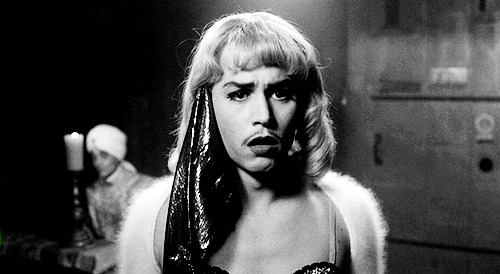
Tim Burton enjoyed Ed Wood's work partially because Wood was not actually as bad as critics thought and also to draw attention to what limitations Wood had while making his films. Throughout Burton's biopic, he manages to incorporate scenes from Ed Wood's movies in order to make a point about the creativity of Wood's works. Throughout Burton's film Ed Wood, there are three main scenes in which Burton pays homage to what the real Ed Wood was trying to accomplish in his films.

Many of the scenes within Ed Wood come directly from Ed Wood's movies in order to make a more authentic feel of how Wood's movies were made. The first scene that exemplifies Burton's love of Wood's films is the introduction. The cheap-looking flying saucers that fly around in Wood's movie Plan 9 inspired Burton to place them in his introduction. The introduction is also a good way to foreshadow what the movie will be about. Obviously the movie was not about flying saucers, but the quality of the film is foreshadowed by the spaceships.

The other scene that Burton uses is the one in which Bela Lugosi "battles" the octopus. Here, Burton is trying to explain that the budget of a director proves difficult to make a realistic movie. Because his budget was low, Wood used other worldly looking beings so that they were not only a change from the norm but also so that he could create different beings without being judged on how "normal" they looked compared to how the public thought they should.

The final scene that is an homage to Wood is the one in which Dolores Fuller, Wood's fiancé, rejects him when he comes out as a cross dresser to her by producing a movie about it. Wood's attempt to make other people understand his movies and enjoy the uniqueness of them appealed to Burton. Tim Burton also felt the struggle to make different movies and match what the audience wanted with the individuality and creative liberty that he wanted. This struggle is also one of the main reasons Tim Burton was attracted to Wood's films.

In conclusion, there are three scenes that Tim Burton uses in order to pay homage to Ed Wood. He uses these three scenes in order to show that Wood used what he had on his budget and made unique movies considering how low his budget was. Burton created the scene in which Dolores rejects Wood's movies in order to represent the audience both in Wood's time and Tim Burton's time. Burton also makes the point that Wood made unique and non conformist movies so that audiences could not judge him on how well it adhered to "normal" standards. Through these elements, Burton pays homage to Wood because of their similarities and the fact that Burton feels a certain sense of sympathy towards Wood because they shared the same struggles as directors and film producers.


Thursday, October 3, 2013

Young - Mummy Boy's Archaeology Archetype


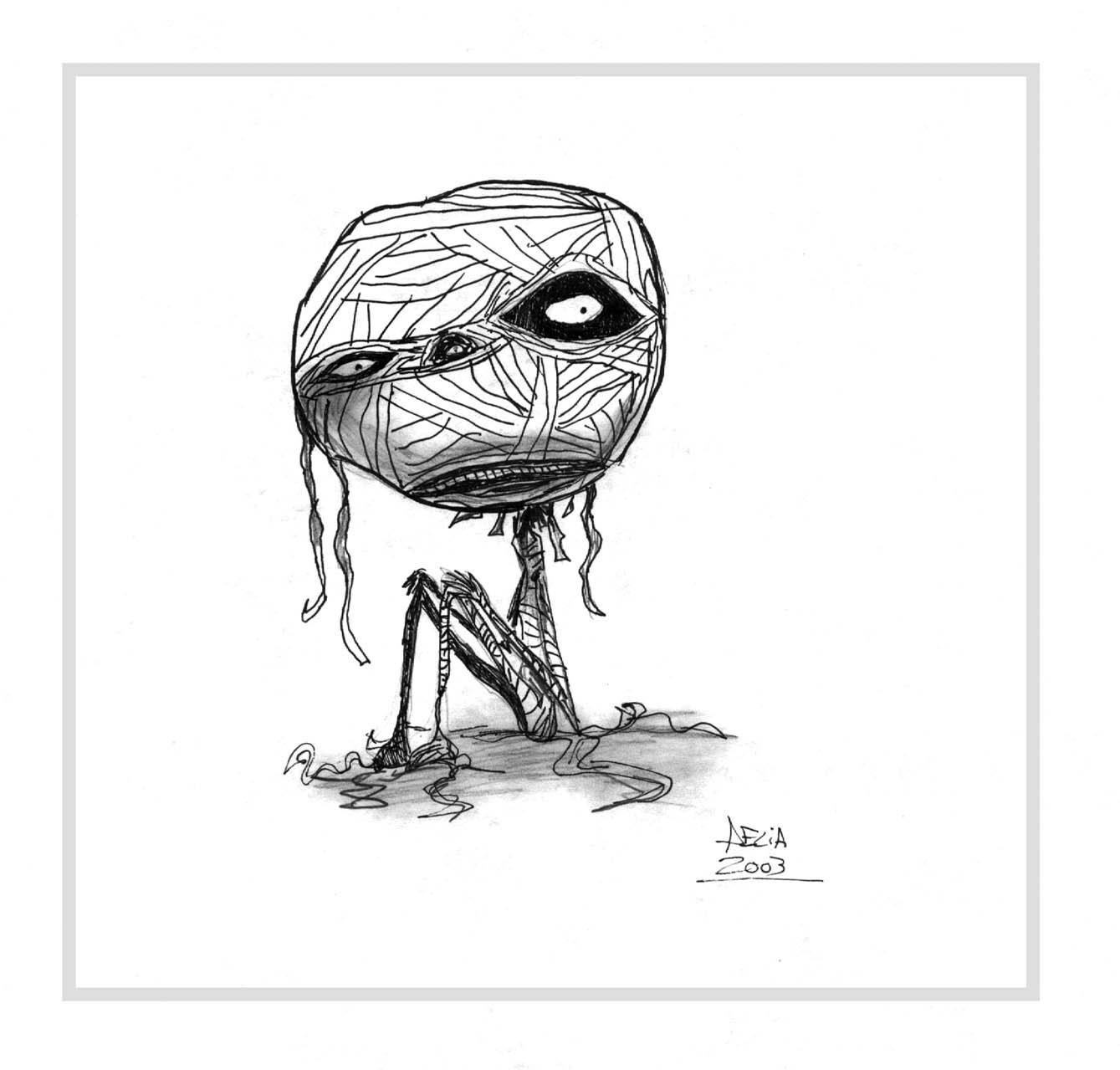
It is easy to see how Carl Jung and Sigmund Freud shared ideas about the collective unconscious. Although Jung's and Freud's ideas varied, Carl Jung's ideas of archetypes most closely resemble those ideas shown in Tim Burton's The Melancholy Death of Oyster Boy and Other Stories. Jung's archetypes of the shadow, trickster, and monster are all present within Burton's story entitled "Mummy Boy."

The shadow archetype is explained as the darker side of an individual's personality. Jung explains it as being worse the more a person or character suppress it. In "Mummy Boy," Burton illustrates the young boy chasing children around doing threatening things and letting out his dark side. In the end, they kill him because he was misunderstood. This illustration could be Burton's way of expressing how he felt angry at children when he was younger and wanted to take out his anger. On the other hand, it could mean that when Burton would let out his feelings and do things he considered fun, he would be shunned by the other children. This archetype is not the only one that appears in this story as the archetype of the trickster is also related to Mummy Boy's shenanigans.

When Mummy boy chases the children around and plays the game of "virgin sacrifice," he goes against the rules of how the normal children play. This unorthodox method of having fun and being malicious makes Mummy boy the archetype for the trickster. Again, it could be that Tim Burton used to have fun in unconventional ways that the other children did not understand or agree with when he was younger. Because of their misunderstandings, both Mummy boy and Tim Burton suffered consequences.

Mummy Boy's demise begins when his parents deem him a "pharaoh's curse" and ends when when the other children mistake him for a piñata and kill him. Mummy Boy did not have the choice to be born the way he was. Yet his parents allowed him to wander around and seemed to not care about him or want anything to do with him. Both Mummy Boy's parents and children his age dehumanize him, thus making him the monster stereotype in their eyes.

In conclusion, Carl Jung's archetypes of the trickster, shadow and monster are all presented in Tim Burton's story "Mummy Boy." The shadow archetype is presented when Mummy Boy chases the children around with a knife. Although closely related to the shadow, the trickster is presented as well. Finally, the monster archetype is presented when the other children and Mummy Boy's parents ostracize him. The children finally destroy him, and no one seems to care. Through the whole story, Mummy Boy tries to be an individual through these archetypes, but the result is that society literally destroys him.


Thursday, September 26, 2013

Young - Not so Perfect Suburbia


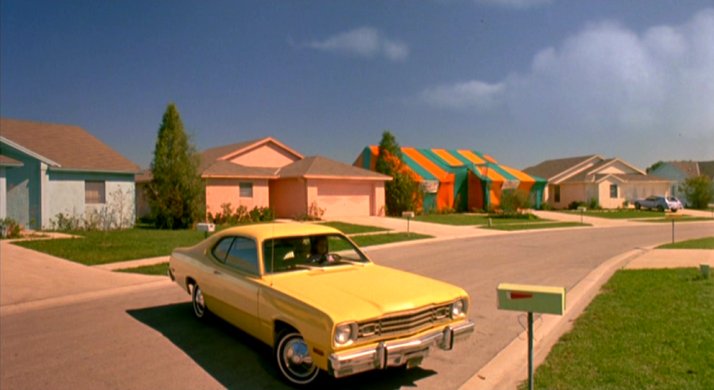
Tim Burton's Edward Scissorhands parallels the average fairytale. However, where many fairytales use violence in order to teach a lesson in morality, Edward Scissorhands leaves the definition of morality to the viewer. In modern life, the morality is determined by the individual or individuals judging the action of himself, herself, or another individual or group. The town Edward lives in made its first mistake when it attempted to make everything seem perfect, and human beings are not perfect. The people within the houses are mainly composed of gossiping housewives. Throughout the movie, the town transforms from seeing Edward as a novel individual into a town that wants to rid itself of any abnormalities in order to sustain the appearance of a "perfect" town. Thus, the morality throughout the story of Edward Scissorhands is vague and not as obvious as that of a normal fairy tale.

 Peg, the Avon Lady, takes Edward away from his castle-like home and introduces him to a town that seems pristine and ideal as they drive through the streets for the first time. Everyone in the town is curious about Edward, and when they find out he has talent, they like him. However, when he is framed later on, they do not help him to understand how he could have done right or question what really happened. This town has a façade of perfection and community, but instead has a mob mentality. The mob begins to want to rid the town of a perceived menace.

This mob mentality is mentioned in other famous fairytale stories; however, Edward Scissorhands is different because there is no obvious moral. For instance, in Mary Shelly's Frankenstein, the moral of the story is to own up to your mistakes. Frankenstein's inventor did not own up to his mistake, and the town had to pay the consequence. On the other hand, in Edward Scissorhands, there is no one to own up to the mistakes Edward makes. The lack of ownership leads the viewer to question whether or not Edward was really to blame for his mistakes and what was really immoral about his actions and the town's reactions.

Burton's movie resembles the typical fairytale because there is the element of the "princess" figure seen in Kim. She seems perfect, at least to Edward, and possesses the sort of "damsel in distress" attitude present in most fairytales. However, she is different because Edward is not the hero, and Kim becomes conflicted when she wants to defend him for most of the movie. She is also confused on what the morality of the situation is and how she should treat Edward.

In conclusion, Edward Scissorhands resembles the traditional fairy tales because there is the element of the mysterious castle as well as the village down the hill. In the movie, there is also the idea of the town living together in fear of the "monster" that threatens it. However, the morality is questionable on both Edward and the town's sides because the town does not want a menace there; yet, it tries to be so perfect, that it ends up denying anything that could add individualism.


Friday, September 20, 2013

Young - A Conflict of Common Characteristics


Throughout Batman Returns, we see Batman conflicted with the similarities he shared with the Penguin due to their pasts. In the first Batman, the hero is not conflicted with the Joker because Batman feels no sympathy for him. He knows the Joker does evil things for power, but they are not as similar as he and the Penguin. In Batman Returns, Batman and the Penguin both share a sense of abandonment, confusion about their identity, and reclusive natures. These similarities cause Batman to feel conflicted about what the Penguin's real motives are.

In terms of abandonment, Batman and the Penguin both acted in different ways. For example, while Batman turned to fight crime because his parents were killed by a person from the city, the Penguin chooses to make crime. The Penguin chooses to retaliate against his parents who have carelessly disposed of him. Consequently, when Batman and the Penguin meet, one is trying to stop the crime that killed his parents and the other is trying to create crime because of his parents. Both characters were abandoned, but one chooses to act violently and the other chooses to act against violence. 

This concept of opposing reactions to their similar situations can also be applied to Batman and the Penguin. For instance, they are both hermits, however, Batman chooses to be a hermit even though he is seen as a well liked philanthropist by the public. On the other hand, the Penguin does not really have a choice but to be a hermit because the media portrays him as a villain. These reactions cause conflicts because when the Penguin emerges, he creates chaos and takes revenge on those who misunderstand him. Meanwhile, Batman fights for those who do not understand him.

Finally, both characters feel the need to understand who they really are and what their place in society is. The Penguin claims his quest is to find out who he really is and Batman initially defends him until he  sees the Penguin suspiciously looking through birth certificates. Batman acts on the need to understand himself through good deeds. Again, the Penguin acts as a juxtaposing force because he searches to find who he is through violence. 

In Batman Returns we see two characters, Batman and the Penguin, affected by similar situations. However, their reactions prove to be completely different. These different reactions cause conflict between the two characters. Batman and the Penguin are both abandoned and secluded, but Batman chooses not to act out in public and to be a hermit. Conversely, the Penguin chooses to create violence and chaos and is rejected by society. Consequently, he has less of a choice to stay away from the public than Batman. They both remain lost and confused about their identity. Batman chooses to seek his identity through heroic acts while the Penguin acts out violently. In Tim Burton's Batman Returns, the hero and the villain are both affected by similar pasts, but act oppositely, thus causing conflict between the two.

Friday, September 13, 2013

Young - Gothic Gotham


     Throughout Batman, Burton sets a dark mood that reflects many characteristics of film noir. He uses certain props, lighting, and characters in order to create a chaotic and claustrophobic world. This world is ridden with the fear of death as well as overtly negative aspects of city life. It is also physically and emotionally dark due to the set and the characters within it. Nonetheless, some aspects of the film noir are overridden by opposing features that Tim Burton added. Burton's film is the epitome of a film noir in many senses; yet, he impairs the feel of film noir through the main characters' actions.

     Tim Burton creates a claustrophobic and isolated effect when, instead of using an actual city, he uses a set on which to film the entire movie. While a regular city would have more light both artificially and naturally, Burton is able to control not only where the light falls, but also how much light falls onto the set. Because all of the lights are artificial, he can dim them at any time. Throughout the movie, the lighting is mostly dim, creating a set that does not feel as open. Another aspect that creates the feeling of claustrophobia is the fog. One such scene that demonstrates this is when Batman and the Joker are in the chemical factory and there are not only clustered barrels of chemicals around, but the pipes around the factory spew fog. The fog then creates a very claustrophobic feel.

     By using a set, Burton is able to set the buildings closer together and never really shows scenes of the horizon--save for one or two scenes when Batman is on the top of a skyscraper or flying in the bat-like plane. In the two scenes that Burton shows Batman above the city, there is a relief from the claustrophobia; however, for the majority of the movie, the sets lend to the effect of a crowded and isolated city.

     A final aspect of film noir is the presence of a "femme fatale." Tim Burton both supports and undermines Vicky Vale's role as a femme fatale within Batman. Typically, a femme fatale is seductive, and her main goal is to gain power through the seduction of the hero. Vicky Vale is seductive, but she does not do it for the power. She also does not impair Batman's ability to perform heroic duties. At times, she instead acts as a damsel in distress.

Image Source: http://ad009cdnb.archdaily.net/wp-content/uploads/2012/12/1354399766-batman-1989-gotham-city-skyline-1024x654-1000x638.jpg

Saturday, September 7, 2013

Young - Nobody Wants the D(eath)


American culture constantly denies forms of unpleasantness. Americans themselves see death as the ultimate form of discomfort. In movies, books, and other mediums, Americans find a satisfaction in the "happily ever after" message they receive in typical stories because happy endings are reassuring, and death is uncertain and irreversible. Nobody knows what happens in the afterlife, and Americans find this fact disturbing. Consequently, they deny it in their everyday lives and reject the concept of life being permanently terminated. It is for this reason that Beetlejuice adheres to the message different medias constantly give the American people and interprets death as a certain yet positive reality.

Throughout the movie, dead beings are shown as animated and quite alive with the exception of a few rules. The Maitlands, for example, do not even realize they are dead until they could not see themselves in the mirror. They also realize that they are bound to their house when they attempt to go outside and are instead transported to Saturn. Although they cannot go outside their house, they are transported to a waiting room. The waiting room connects customs Americans are used to with death. In real life, many Americans are familiar with waiting rooms. The waiting room in Beetlejuice is relatable and therefore comforting to the audience. It also shows that although the Maitlands may not be able to leave their house, they can still do things average humans do but in a different context. The portrayal of death as a different form of living is thus, a denial of death in the film.

The second instance of the denial of death includes the Maitlands summoning of deceased beings. Betelgeuse is dead before the Maitlands summon him, but after they declare his name three times, he rises. Betelgeuse appears to be one of the most lively dead beings in the movie. This summoning also occurs when Otho performs the séance and the Maitlands- for a short time- live again. Both of these instances of animating the dead demonstrates the absence of a permanent death in Beetlejuice.

Finally, at the conclusion of the film, the Maitlands and the Deetzs live in harmony and continue life as normal. When Lydia returns home, she greets the Maitlands, and they act as her parents. Along those lines, Mrs. Deets uses her experience with the paranormal as inspiration for her art. The entire movie thus denies death through portraying the dead as doing things average living people do.

Photo source: collegehumor.com

Thursday, August 29, 2013

Young - Tim Burton Reading 1

It's surprising that Tim Burton's inspiration for his films include Vincent Van Gogh's paintings. I would not have expected Tim Burton to favor works with such vibrant colors such as the ones in Van Gogh's works. I would have expected him to get influence from some of Francisco Goya's works such as Saturn Devouring His Son:
...or something else this macabre
However, whoever watches some of Tim Burton's movies (mostly the Nightmare Before Christmas and The Corpse Bride) may feel the same dark feeling the average reader may have while reading Edgar Allen Poe. 
Another point that the chapters make is how much Burton rejected normalization and made the villains seem misunderstood. Many times the heroes in books and movies are given such a good reputation when sometimes the villain is portrayed in a completely different light when he/she could be misinterpreted. I just think it's interesting that Burton was able to falsify the whole façade of a perfectly happy family and bring out more complicated emotions. 

Young - Intro

Hey y'all, I'm Sydney (in case you missed the name at the top)...Anyway, first week of school is going all right. Everyone here is pretty relaxed and quite easy to talk to. I love how during the first few weeks it's completely normal to just go up to people and ask about them and get their numbers, and it's pretty normal so that's cool. I've met mostly music majors (shocking to find music majors here, I know) and some science people. Across the board, they are all very much individuals. It's refreshing because I have friends who go to LSU and they say everyone dresses in Nike shorts and long t-shirts. Cliche STM volleyball players...It's not always bad but I guess if you walk around and everyone's a clone it kinda sucks. ANYWAY...
Classes are meh. The teacher's are pretty passionate about what they do, which is encouraging. I'm a biology major, but it turns out I hate math and chemistry and yeah....Long story short I'm probably going to un-declare my major soon(*tomorrow*) Still want to stay in this class though!
I'm starting to wonder if everyone else (or at least everyone else who is undeclared) is as lost as I am because that would be really awesome, actually ((~*I wouldn't be alone, yay!*~)) Just kidding, I actually have a couple of friends who are just as lost as I am. I also have some friends that are super confident and determined about what they are doing, and they don't care what job they get in the future. It's amazing really, how confident they are. I wish I could just know what I want to do. Actually, I kind of do know what I want to do: I've narrowed it down to anything that isn't math/science related. I talked to my mom about an hour ago just AS A COURTESY to tell her I was changing my major and she basically told me I would never be able to support myself, and not be able to continue living the lifestyle that I do. (I don't even know what the aforementioned statement even means, I shop at Goodwill and literally only spend money on food. Also, I'm 5" 2' and 110 lbs so obviously I don't eat much). She also said I would earn about 25K a year so that was encouraging (notreallyatall).
Whatever I do though, I definitely cannot stick with science classes. I need more language in my life. I was very good at Spanish and hopefully that skill will carry over and I can learn more languages. Maybe be a teacher or something as long as I'm happy.