Showing posts with label Kyler Lake. Show all posts

Thursday, December 5, 2013

Lake, Kyler - Farewell (Final Blog)


Over the course of our The World of Tim Burton class, I learned many things about Tim Burton and film creation, the world we live in and the various ways in which it can be viewed, and most importantly, I learned more about myself.  I really appreciated watching how Burton used a very dark and lonely upbringing filled with abandonment, isolation, and family issues to create masterpieces.  Being an artist myself with a somewhat tragic background, I have always used art to channel my feelings whether it be writing a song, telling jokes, or writing a screenplay.  It is very healing and cleansing to be able to express yourself in some way.  Tim Burton never felt a true connection and understanding with his father, which he had to reconcile after his father passed away.  This is evident in many of his movies, but especially “Big Fish”.  Where Burton crafts a movie that tells a story or hardship and disconnect between father and son.  Although I was lucky enough to have a nice relationship with my father while he was alive, I was only seven years old when he passed away.  I have similar feelings when it comes to the separation and missed opportunities from a father figure that Burton has and instills in his films.  More than that, Burton and the characters he creates long to be loved and accepted by a family.  Most of my life has been spent with just me and my mom and because of this I have also tried to grow my family beyond the bloodline with very close friends that I now consider a part of my family. 
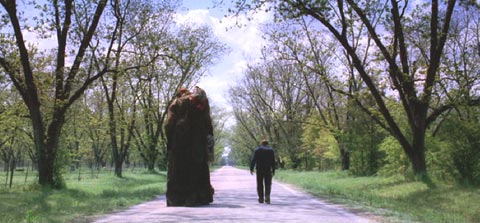
Burton has a gift for making a very obscure and difficult subject matter into a finished product that will entertain, educate, and captivate an audience.  Besides dealing with difficult subject matter, he will create very estranged, misunderstood, and liminal characters but crafts his movies in such a way where most of the time you actually care about what happens to these outcast characters.  Edward Scissorhands, Karl the Giant, and Willy Wonka all have similar ways in which they are viewed by society, most of which is out of their control.  It is because of various circumstances that these characters are forced to be outcasts.  Edward Scissorhands was a creation that had Scissors for hands and was left to live all alone in the house on top of the hill after his “father”/creator died.  The house on the hill is also a recurring appearance in Tim Burton films.  Karl the Giant was feared and unable to make a connection with another person because of his appearance and sheer gigantism.  It isn’t until Edward Bloom gives the Giant a chance and talks to him like a real person that Karl can explain his actions and finally be understood by someone.  He was just hungry!  Willy Wonka was a very successful chocolatier and was admired by the masses but he was all alone and more isolated and abandoned than anyone else in the film.  His father, a dentist, neglected his son and this eventually led to the creation of a huge business and chocolate factory.  All three of these characters are just longing to connect with someone and be understood. Burton uses genius plots and very distorted but kindhearted and genuine characters to make you feel the emotions that he has felt throughout his life and I think that is one of the most impressive parts of Burton’s creative repertoire and ultimately, his legacy.  

Sunday, November 24, 2013

Lake - Sweeney Todd


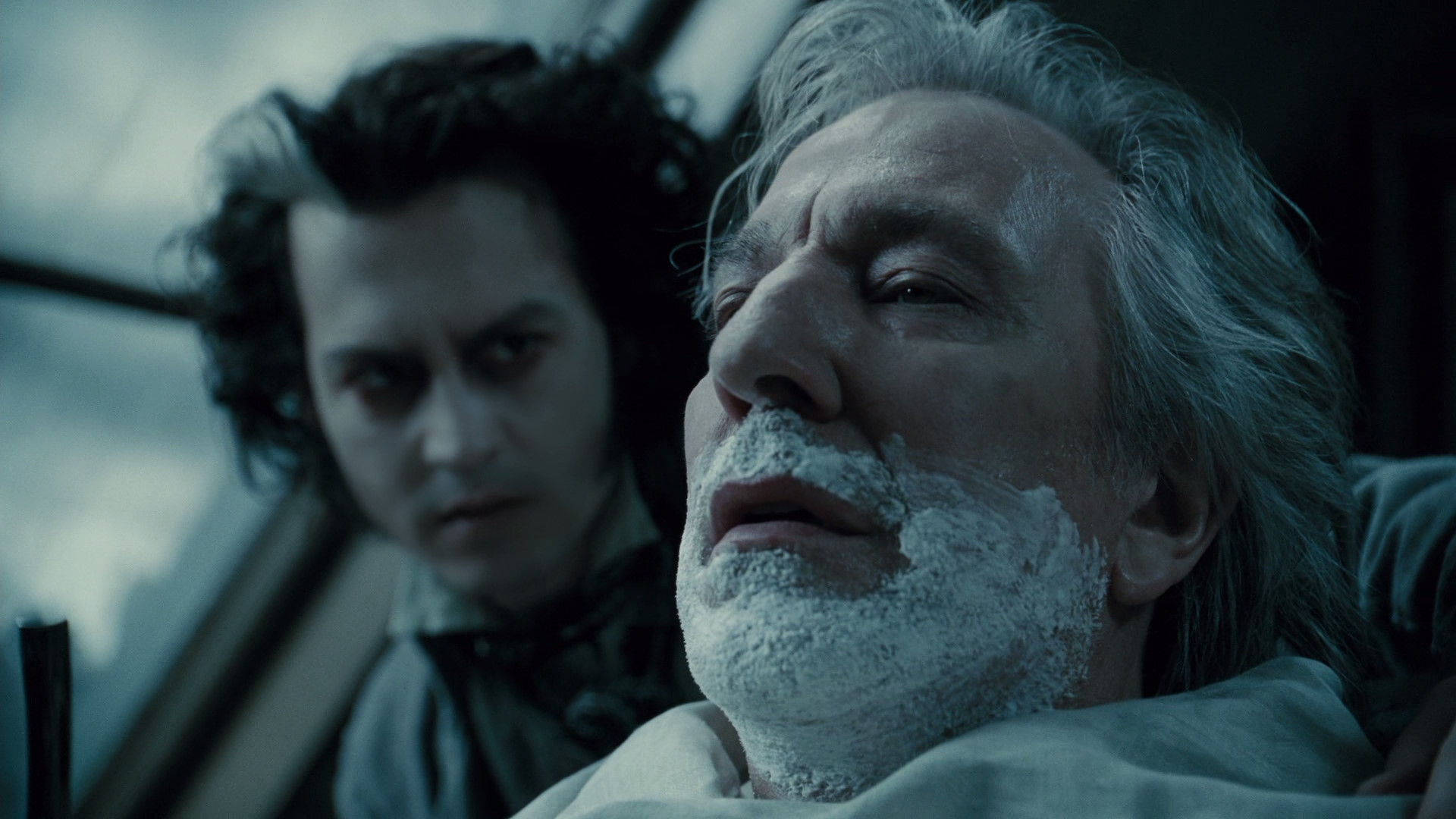
In Sweeney Todd: The Demon Barber of Fleet Street, Tim Burton makes viewers relate to and sympathize with both Sweeney Todd and Mrs. Lovett, even though they are the driving force and ultimate cause of many murders and mass cannibalism.  Sweeney Todd has a very dark and depressing past, a past in which was completely out of his control and forced upon him by a corrupt Judge and Mrs. Lovett is a mysterious character that draws the audience in because of her intriguing but twisted persona.  Also, very typical of a Tim Burton film, Burton shows death in a comedic light and this further helps the audience accept both characters and the crimes they’re committing.  Death being viewed in a humorous lens allows the audience to continue to feel sorry for Todd and back him in is quest for vengeance instead of feeling sorry for the people getting brutally murdered and stuffed into a meat pie.  The audience is led believe that every person who is murdered is not important and that all victims are the same.  This is shown in Mrs. Lovett’s store when Todd and Lovett come to the conclusion that it would be a waste to discard the bodies with how expensive meat is and how profitable it would to do so.  They then go on to sing a song that claims all people are the same and deserve to die; everyone just tastes a little different.  Also, in the scene where Sweeny Todd kills 10+ people in a row, it shows that these people weren’t truly cared for and that is what allowed such a mass amount of people to people murdered so quickly.  The urbanization of London and Cannibalism go hand and hand.  It is “man eating man” and Sweeney Todd and Mrs. Lovett just helped materialize and externalize the way in which people were treating one another.  Many people were forced to move to London in order to survive and support themselves and families and were quickly eaten up by the city and in extreme circumstance other desperate people in the city.  An industrialized city will consume its inhabitants and make people conform to customs and ways of life that are foul.  It’s very interesting to see this twisted but very real perspective by Tim Burton of the ways of life in a city like London and how it truly can change people and his or her moral compass.

Monday, November 18, 2013

Lake - Big Fish


In Big Fish, Tim Burton attempts to blur the lines of fantasy and reality and show the silver lining that makes imagination so profound and powerful.  Burton creates Ed Bloom, an incredible man that is one of the more “normal” characters in film but is still wildly a product of a good imagination and storytelling.  Ed Bloom’s life is a wild adventure and he comes across many estranged and distorted people that play pivotal roles in both, Ed’s life and the plot of Big Fish itself.  These grotesque characters help portray Burton’s infatuation with the gothic and unusual, shows internally how Burton could have felt about himself, and externally how he felt about his father, “a real fairy-tale character.” 
Burton makes his living by showing the world his twisted view of reality in very well put together films.  Big Fish is no different.  Burton creates many characters in the film that should frighten Ed Bloom and the movie viewer but it turns out that all of these characters are very kindhearted people, but they are misunderstood.  This is very representative of Burton because when looking at Big Fish and the culmination of his work, it is obvious that he is a tortured, misunderstood soul that longs for love and acceptance in his films.  Two characters that represent this are Ed Bloom and the Giant.  Ed Bloom in his stories is an amazing heroic gentleman who always seems to save the day, win the game, and get the girl, but as an older man he tells stories in order to maintain the same level of praise.  The fact that Ed Bloom would attempt to steal his sons thunder at one of the largest moments in his son’s life proves that he is craving love and respect.  Everyone except Ed Bloom fears the Giant in Ed’s hometown and it turns out that he was just misunderstood and hungry.  Ed Bloom accepts the Giant for who he is and goes on a journey with the Giant and genuinely cares about the Giant.  When Ed Bloom goes to Spectre, he easily could have ditched the Giant but he doesn’t; instead he gives the Giant his backpack and assures him that he will be back.  Burton shows that anyone can become friends and form a relationship.  This is very profound when you put this idea to Burton himself and the relationship he had with his father.  Burton is trying to show on many different levels with many different characters that him and his father could reconcile their relationship even though it has been difficult and Burton felt coldshouldered as a child.  

Sunday, November 10, 2013

Lake - Planet of the Apes


In Planet of the Apes, Burton shows many dualities and in his Burton way twists the typical perception of how we view and have grown to accept these dualities.  Burton does this with species, gender, civil liberties vs slavery, education vs illiteracy, bellicosity vs passivity, science/technology vs primitivism.  By switching the roles of humans and apes, Burton forces the viewer to think not only about what it means to be human but what it means to be anything but human.  We all might be more animalistic then we want to believe.  Out of all of the dualities mentioned above, I think that science/technology vs primitivism is the most important especially after watching the original film.  In the original Planet of the Apes, the movie came out in the midst of racial tensions and the fear of the atom bomb so the film was very relevant for many reasons.  The movie concludes with the Ape doctor basically promoting a plateau of knowledge because he knows what can and will happen when technology reaches a point where mass destruction is possible and plausible.  Charlton Heston’s character, believing he is above the apes rides along the coast to find the Statue of Liberty and says, “You blew it up!”  This is important because it is a direct commentary on the world of technology and how the end of human dominance was because of advanced technology with the atom bomb.  Burton, although not focused on the atom bomb, focuses on technology and how with technology comes power.  This is shown with Captain Leo’s flare gun and pistol.  Whoever is in control of these advanced weapons has control of the situation and when the evil Ape is trapped in the bulletproof communications room and fires off rounds of the gun, it absolutely petrifies him, further showing the damaging power of advanced technology.  Another element that Burton shows is human faith in technology.  Captain Leo has faith in his spaceship to save him from the trouble that he has gotten into.  He trusts his ship and his human skill to get his monkey and return back to command safely, he was very wrong.  He then believes that getting to the marker will get him back in contact with his team and therefore a salvation back to earth.  He was wrong.  He then believes that his ship will bring him back in time and everything will be okay.  Once again, he was wrong.  It isn’t until the very end of the film where Captain Leo goes even further in time that he gives up on everything he has believed to be true and faces the harsh reality that he is stuck in an upside down world. 

Sunday, November 3, 2013

Lake - Sleepy Hollow


Tim Burton utilizes Irving’s story The Legend of Sleepy Hollow to render a film filled with corruption, greed, and retribution.  Burton doesn’t stay completely true to the story but keeps key concepts and ideas.  The changing of the plot and characters doesn’t bode well for Burton if he was trying to create a perfect representation of the story, but I believe that Burton’s twists are what make his movies so different and interesting. 
            To start, let’s talk about the ending.  The movie’s ending is nowhere remotely close to how Irving’s story closes.  The Headless Horseman technically did not exist and there was no evil witch controlling the undead nightrider.  Also, Katrina did not fall in love with Ichabod; in fact, in the story she didn’t even like Ichabod at all.  Secondly, the movie and story version of Ichabod Crane are very different.  Irving’s Ichabod was an unattractive, slimeball but Burton creates an Ichabod crane that has charm, class, and good looks.  Also, in Irving’s story Ichabod was a professor and choirmaster and in Burton’s film Ichabod is a constable.  This already drastically changes the story and why Ichabod winds up in Sleepy Hollow.  In the story, Ichabod travels to Sleepy Hollow in order to teach and live a very modest lifestyle.  In the film, Ichabod is sent to Sleepy Hollow to investigate unusual murders.  These differences are very important because it creates two different opinions of the same character.  The movie makes you want to see Ichabod succeed, but the story really leaves the reader undecided on how to feel about Ichabod.  One thing about Ichabod that made it through to the movie is his very superstitious mental state.  The difference is how Ichabod handles his superstitions.  In the movie he attempts to be secretive with his beliefs but in the story he is very open about them and actually loves hearing stories about ghosts, spirits, and the supernatural. 
            Even though Burton changes many parts of Irving’s story, he still succeeds in incorporating many elements of the story that relate to him and his view of the world around him.  Burton is paying homage to Irving because he can relate to him and a creator of art and as a person.  This is very similar to other works that Burton has done.  Whether relating to a key character or the creator of the work, Burton likes to create films that have deep rooted meaning to him.